History of The Congregation
With the motto "My soul glorifies the Lord," we the SMRA Sisters pursue a simple, communal lifestyle marked by shared prayer and joy.
The Context of the foundation
The Motive: “The offspring of the nations will deliver salvation to the homeland.” The genuine reflection of this saying is realized in the life of the Associates of Mary Queen of the Apostles (SMRA) congregation. In 1893, Pope Leo XIII addressed the need of the Indian Church in his Encyclical “Ad Extremes”. He emphasized that the Catholic Church in India would not be firmly established until a local organization of priests was formed. The matter was of significant concern to the respective Popes. Simultaneously, Władysław Michał Bonifacy Zaleski, the Apostolic Nuncio to India, emphasized the urgent necessity of establishing a local association of priests in India, considering this matter of utmost significance.
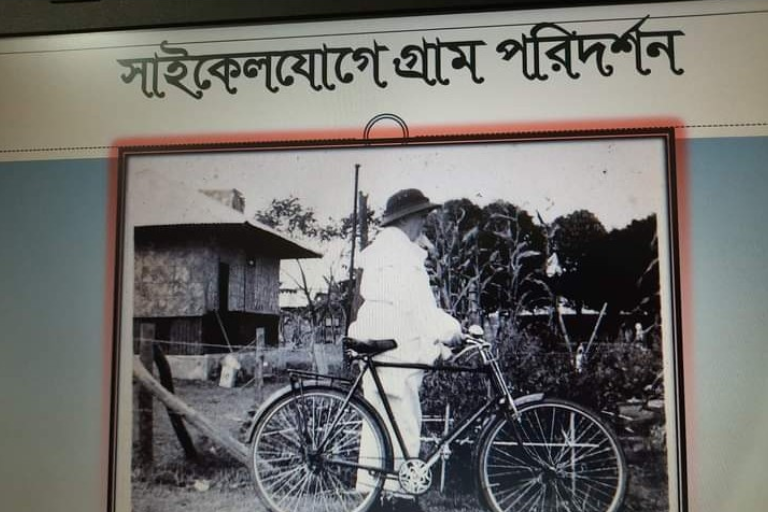
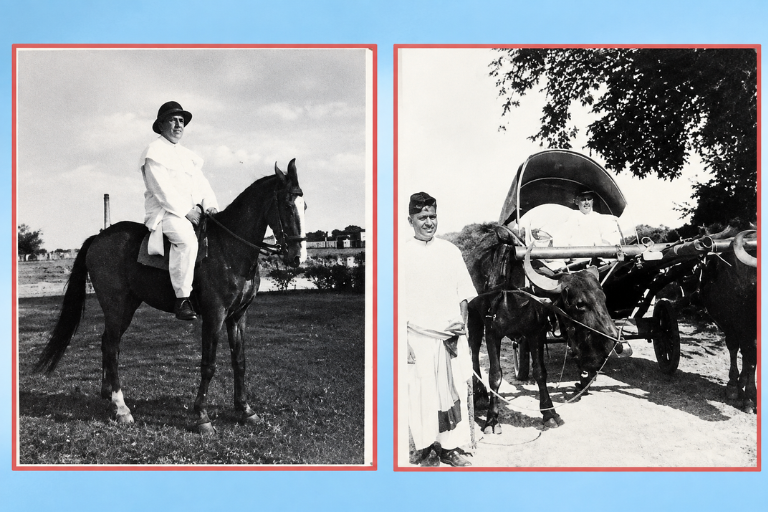
Dream as a Seed: This speech served as inspiration for Bishop Joseph Armand Legrand, CSC
Legrand, CSC, the bishop of Dhaka, to establish a women’s religious community in addition to founding the local priest’s association. To achieve his aim, he extended an invitation to the sisters of the Holy Cross Congregation to assist him. Meanwhile, he retired and this responsibility fell to his successor, Bishop Timothy John Crowley, CSC.
Why Dreaming?
In 19 centuries, Bengal then was known for its famine, natural calamities, illiteracy and undeveloped social system. In those days Indian women in the zenana custom were bound to keep themselves busy only with household works. The social structure did not allow them to go out of their homes. Looking at a man was considered taboo for a woman. They were deprived of education, and were oppressed by harmful superstitions.
Native customs opposed male physicians to attend to female members of society. It was practically impossible in Hindu-Muslim cultures for women to be attended by male medical practitioners. They would rather die than to see to male doctors. Many women, especially pregnant women whom were not allowed to see male doctors both mother and child die. Specially, the condition of pregnant mothers trapped in the sunless and airless and allegedly unhygienic condition broke the heart Bishop Crowley with pity for them. This situation motivated Bishop Crowley to open a local congregation with local girls.
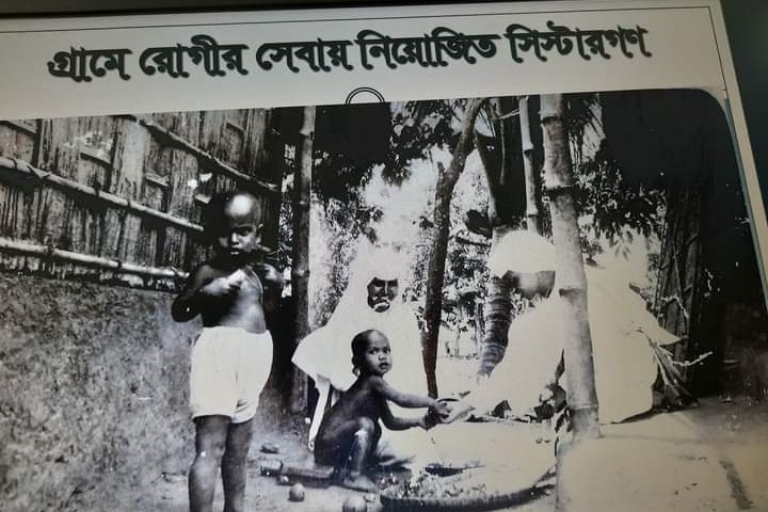
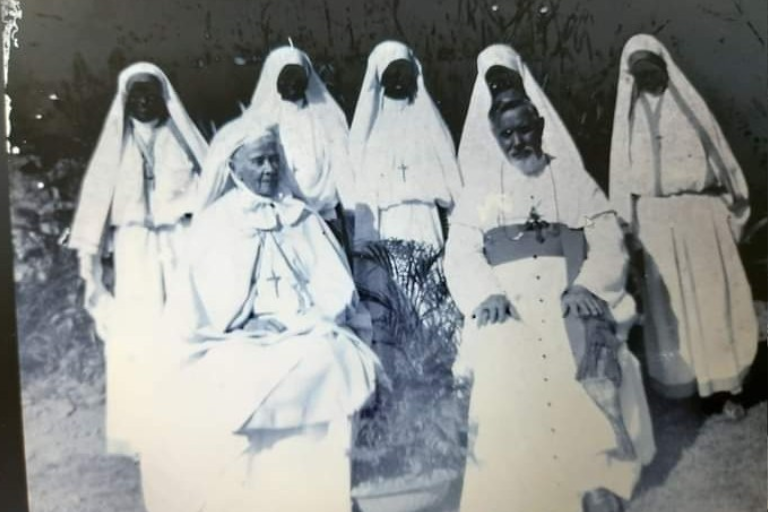
In 1927 three Holy Cross Sisters (Sister Alga, CSC, Sister Rose Bernard, CSC, and Sister Rose Monica, CSC) served at Toomolia. Teaching, preaching, serving the orphan, helping in the boarding house of premature widows, attending to the sick and giving medicine in the dispensary were the main apostolate of the sisters.
Sister Rose Bernard who noticed the miserable situation of village women also felt the need to start a new congregation with the local girls. It is true that the engagement of the native Sisters among their own people would be easier and fruitful than foreign missionaries. From experience, the natives know the nature and customs of their people. They have lived among Hindus and Muslims since childhood without arousing any suspicion and it was indeed very important especially in times of crisis.
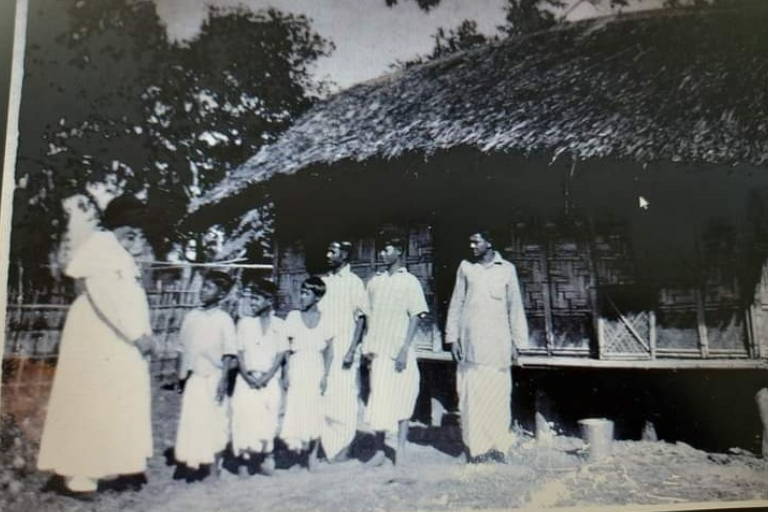
Bishop Crowley took the initiative to start the new congregation. Sister Rose Bernard was appointed as the Novice Mistress. The eight students, those who had received Diploma of grade VI from St. Mary’s Junior School at Toomilia, were chosen to be the first
members of the new congregation. On March 5, 1933, at the chapel of Holy Cross Sisters at Toomilia, through a liturgical ceremony, they entered into the new congregation and thus ‘The Associates of Mary Queen of Apostles’ (SMRA) was born. Toomilia St Mary’s Convent is their Mother House.
From the beginning until 1952, the Congregation was under the Holy Cross Sisters. In 1952 the SMRA Congregation was handed over to its local authority. Sister Mary Agnes, SMRA, who was the first Superior General. The Holy Cross Sisters then left Toomilia, Panjora and Rangamatia and were settled at Dhaka city in order to run the Holy Cross School and College. The SMRA Sisters took over the responsibilities of the apostolate in the schools, dispensaries, hostel, orphanage and other social and pastoral activities.
After the death of its founder in 1945 to this day the successive Bishops of the Archdiocese of Dhaka, + Archbishop Granner, CSC, + Archbishop Theotonius A. Gangulee, CSC, + Archbishop Michael Rozario, DD, + Archbishop Paulinus Costa, DD, Bishop Theotonius Gomes, CSC (Auxiliary bishop of Dhaka), Archbishop Patrick D’ Rozario, CSC, Archbishop Bijoy D’ Cruze, OMI, and Bishop Subroto B. Gomes (Auxiliary bishop of Dhaka), are accompanying and fostering the growth of this local missionary congregation.
The Superior Generals of the Congregation who served in the highest authority were + Sister Mary Agnes, SMRA, + Sister Mary Petra, SMRA, + Sister Mary Marilyn, SMRA, + Sister Mary Teresa, SMRA, Sister Mary Priti, SMRA, Sister Mary Dipti, SMRA, Sister Mary Anita, SMRA, Sr. Mary Minoti, SMRA and Sr. Mary Shubhra, SMRA (Present).